

From Seeding to Harvesting: An Integrated Automation Equipment Solution for Hydroponic Leafy Vegetables in Greenhouses
In modern facility agriculture, glass green houses and plastic greenhouses are two mainstream production carriers. Hydroponics, as a typical representative of soilless planting, is driving leafy vegetable production toward high efficiency, cleanliness, and full automation. This article integrates the complete operational chain from seeding to harvesting and proposes an automated equipment solution suitable for both types of greenhouses, enabling year-round balanced supply of leafy vegetables.
I. Automated Seeding and Nursery Propagation
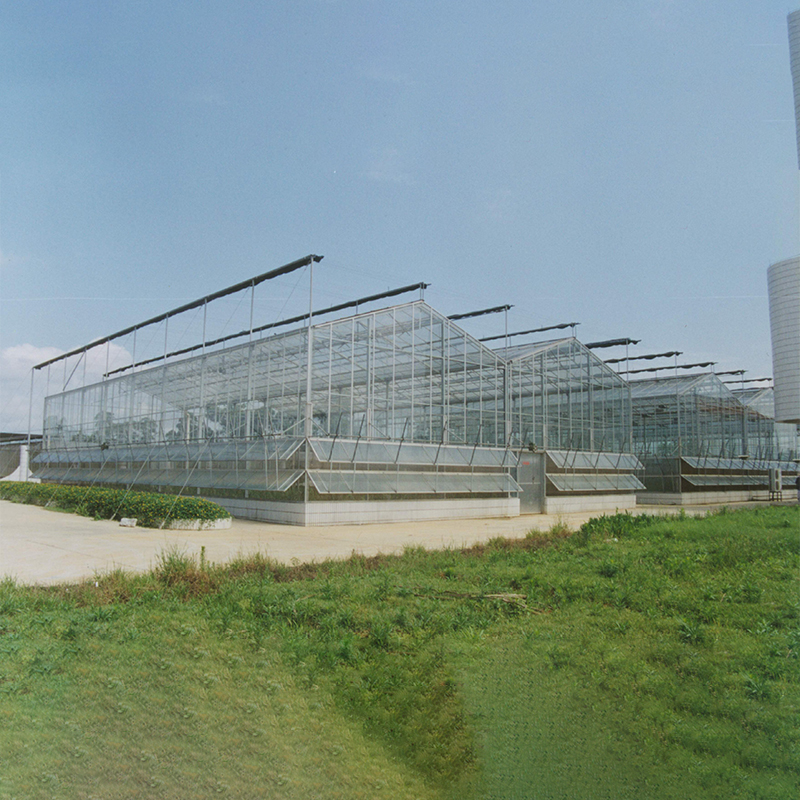
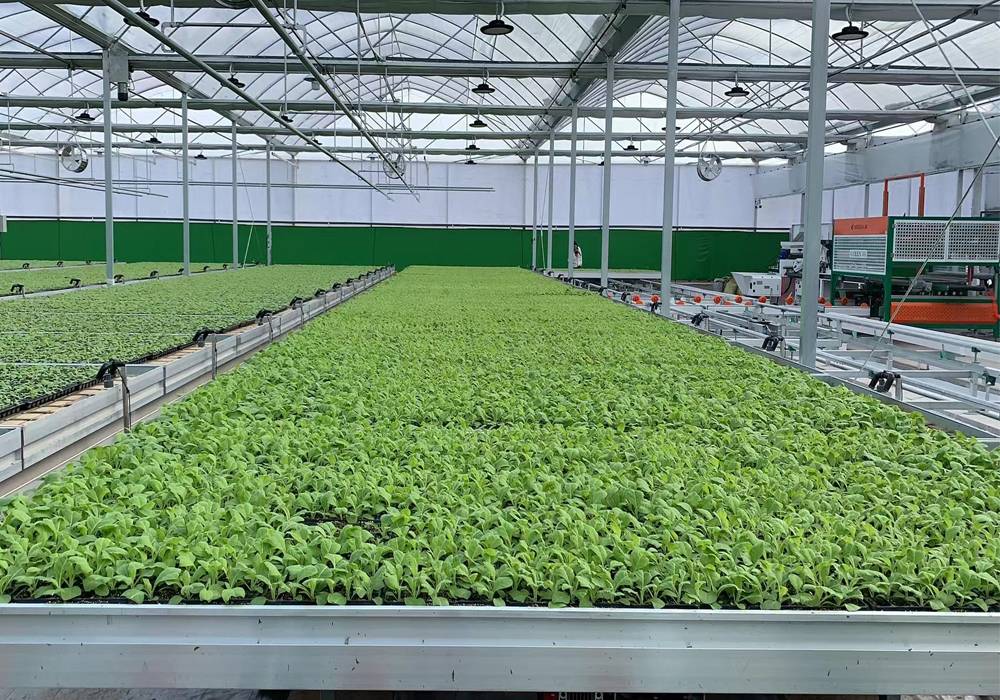
Seeding is the first step in hydroponic production. An automatic air-suction seeder is used to precisely sow leafy vegetable seeds into rockwool or sponge nursery plugs, with 1–2 seeds per hole, achieving an efficiency of 300 trays per hour. After sowing, the trays are transferred to a constant-temperature and constant-humidity germination room (20–25°C, 85% relative humidity). After 48 hours, they are moved to mobile nursery shelves inside the glass green houses. Glass green houses feature high light transmittance and good heat retention; together with LED supplemental lighting, the nursery period can be shortened to 12–14 days. The soilless planting substrate at this stage avoids soil-borne diseases, providing healthy seedlings for subsequent hydroponic transplanting.
II. Transplanting System
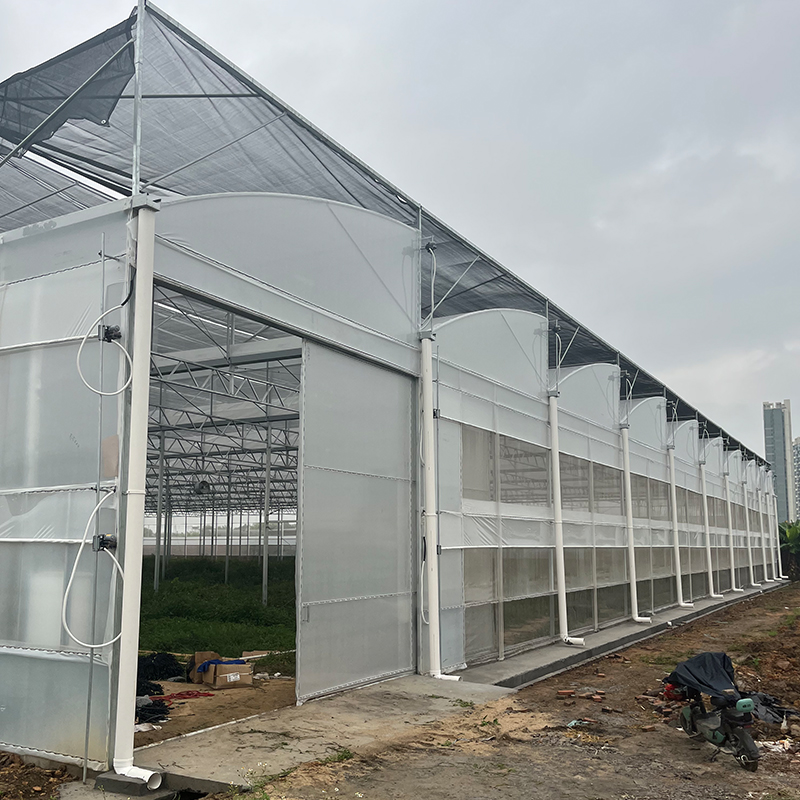
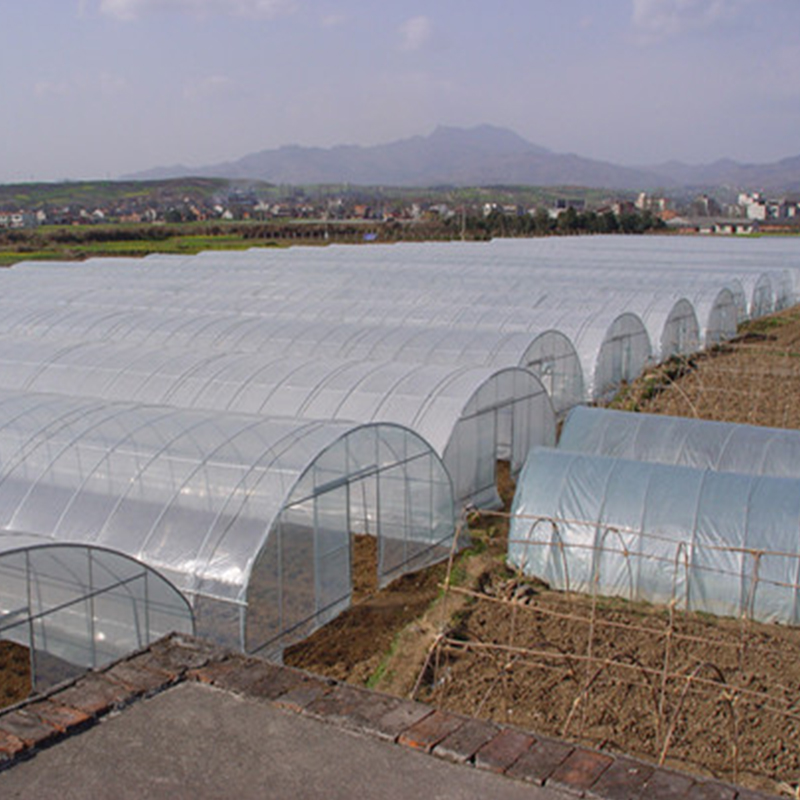
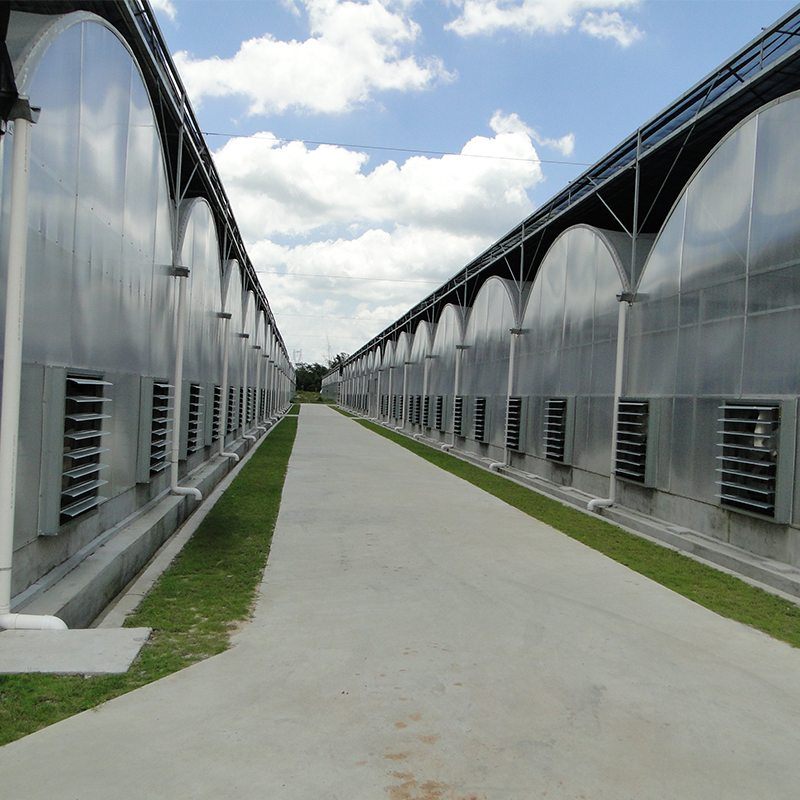
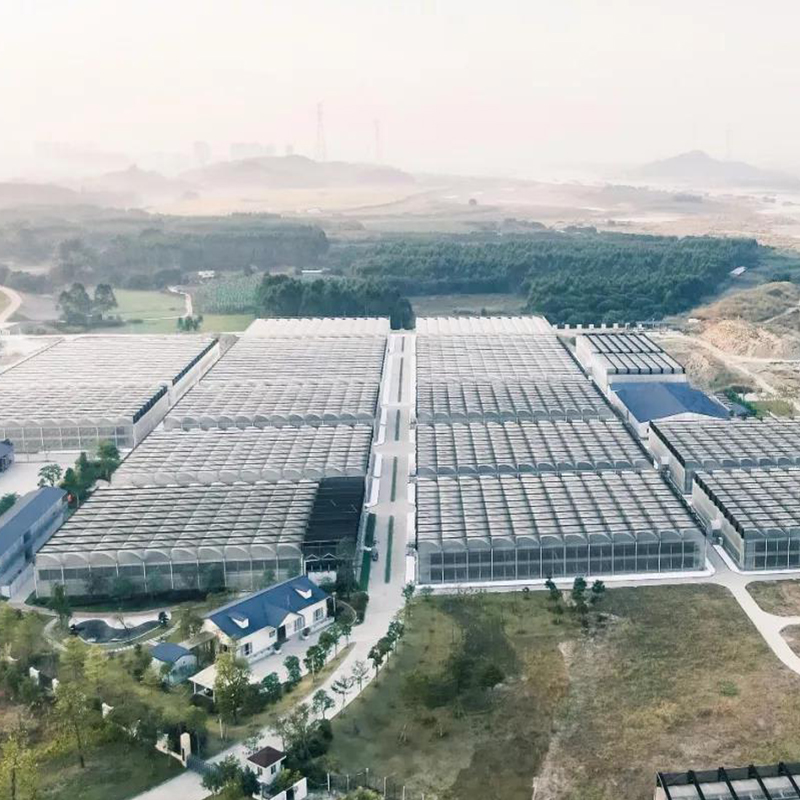
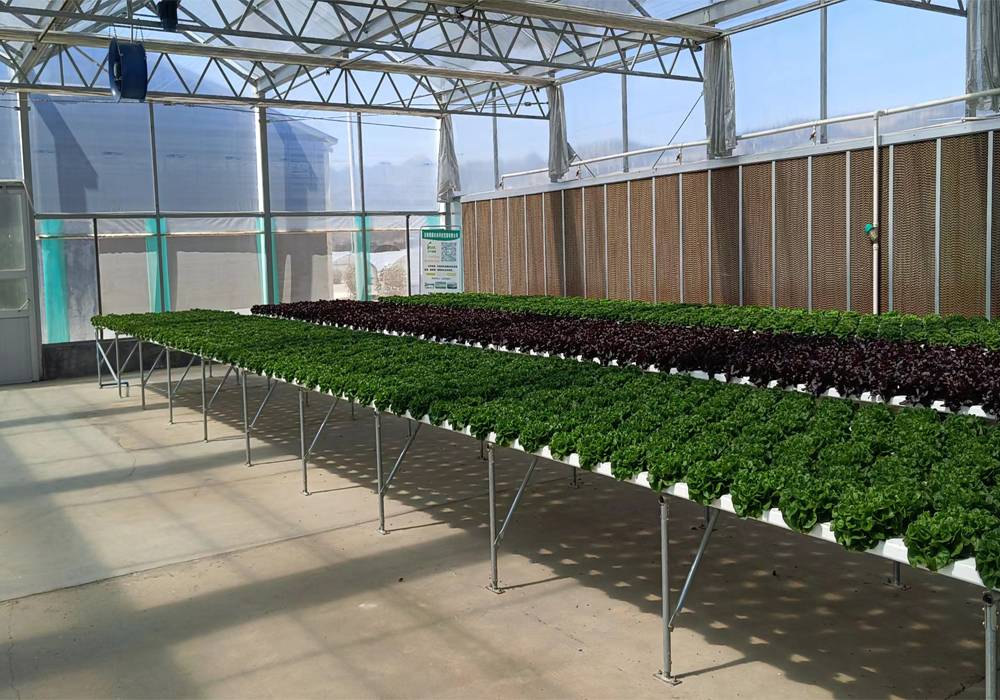
When seedlings have developed 2–3 true leaves, a Cartesian coordinate transplanting robot removes the seedlings from the nursery trays and inserts them into the planting holes of the hydroponic floating boards. The floating boards sit on nutrient solution tanks or NFT (Nutrient Film Technique) channels. In plastic greenhouses, where summer light intensity and temperatures are high, the transplanting robot needs to be equipped with shading and temperature control modules to prevent heat stress on seedlings. Plastic greenhouses have lower costs and are suitable for large-scale multi-span layouts; the transplanting line can operate bidirectionally along the cultivation channels, with a single machine capable of transplanting 20,000 plants per day. At this stage, the soilless planting environment requires the nutrient solution EC to be controlled at 1.2–1.8 mS/cm and pH at 5.5–6.5.
III. Closed-Loop Control of Environment and Nutrient Solution
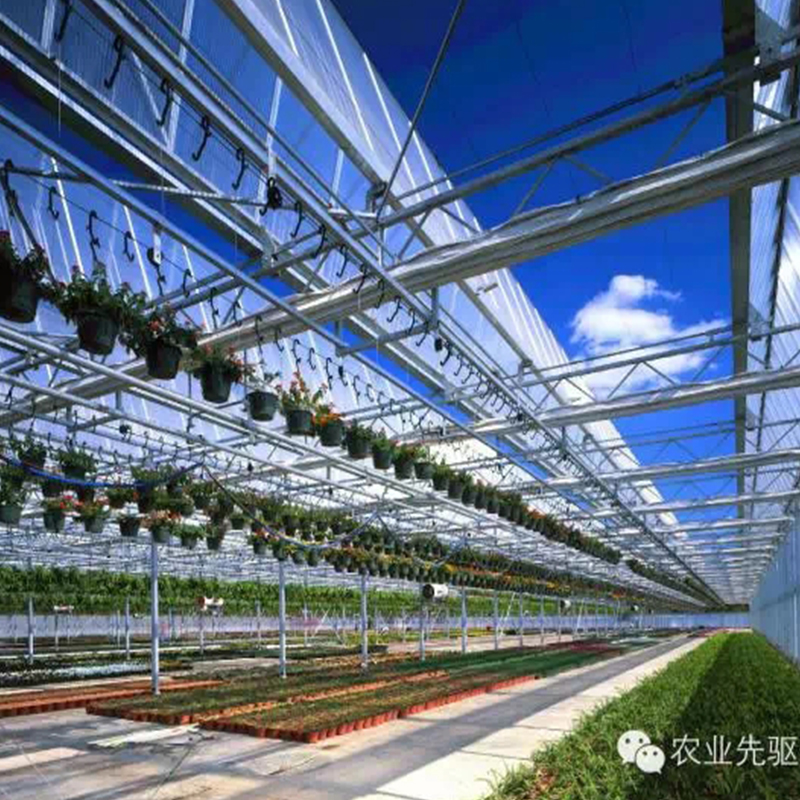
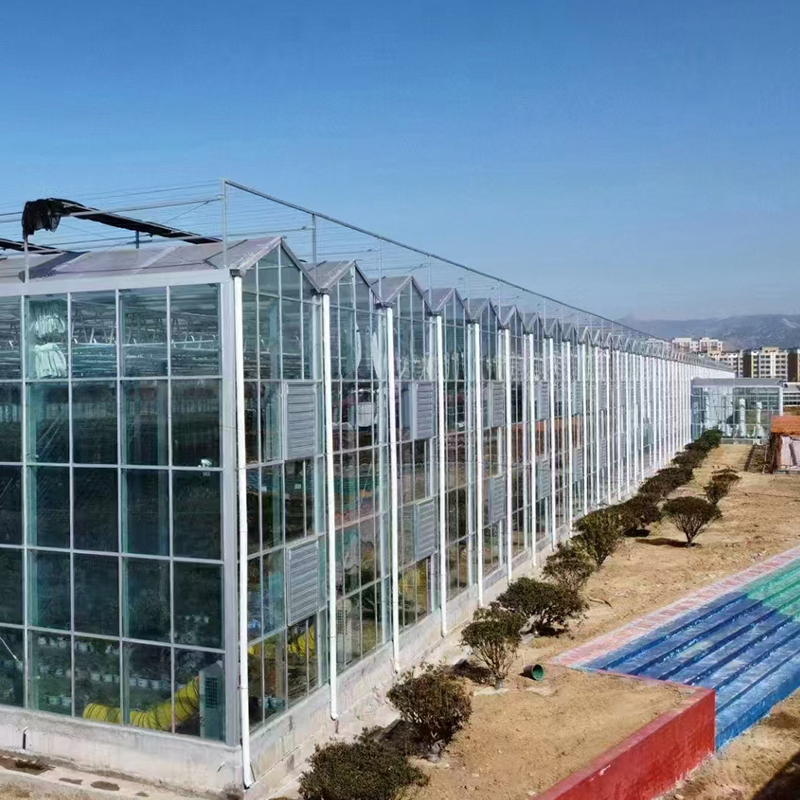
The core of hydroponics lies in dynamic nutrient solution management. Integrated online sensors (EC, pH, dissolved oxygen, liquid temperature) and IoT controllers automatically mix three types of stock solutions (A, B, C) and replenish water in real time. In glass green houses, due to low winter nighttime temperatures, the nutrient solution needs to be preheated to 18–22°C via a plate heat exchanger before supply; in summer, it is cooled by a chiller. The high light transmittance of glass green houses facilitates photosynthesis of leafy vegetables, but it must be combined with external shading screens and high-pressure misting for cooling to prevent nutrient solution temperatures from exceeding 28°C.
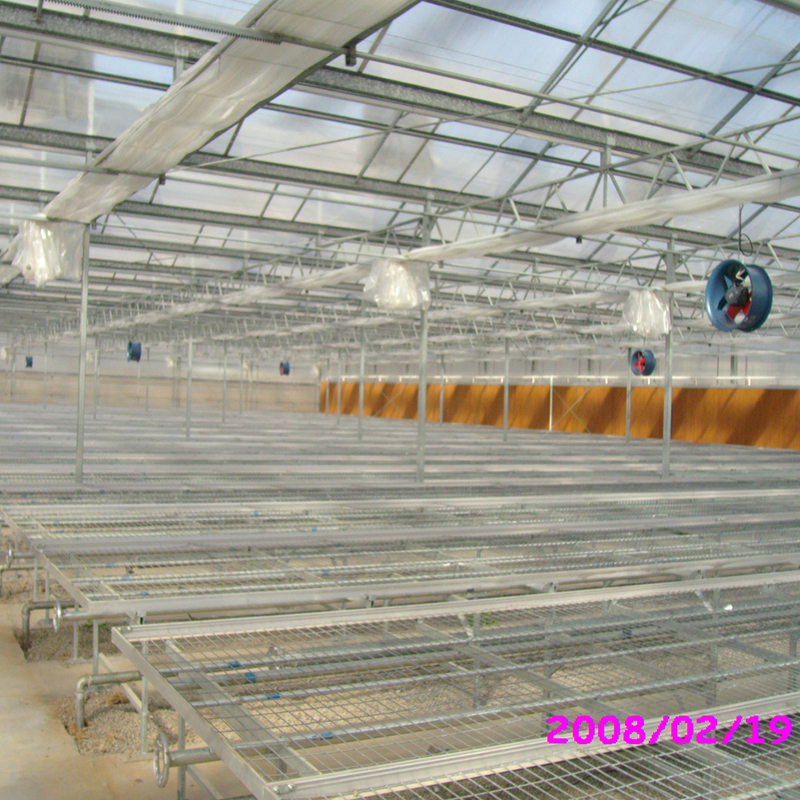
Environmental fluctuations in plastic greenhouses are larger, so the automation solution adds forced ventilation, wet curtain fans, and circulating fans. The nutrient solution circulation system uses a variable-frequency pump to supply the hydroponic channels at regular intervals (5 minutes of supply every 30 minutes), and the return solution is disinfected by UV before being reused. The whole soilless planting system also integrates CO₂ enrichment equipment. When the CO₂ concentration inside a plastic greenhouse drops below 400 ppm, gaseous CO₂ is automatically released to reach 800–1000 ppm, which can increase the yield of leafy vegetables such as lettuce and pak choi by more than 20%.
IV. Growth Monitoring and Automated Harvesting
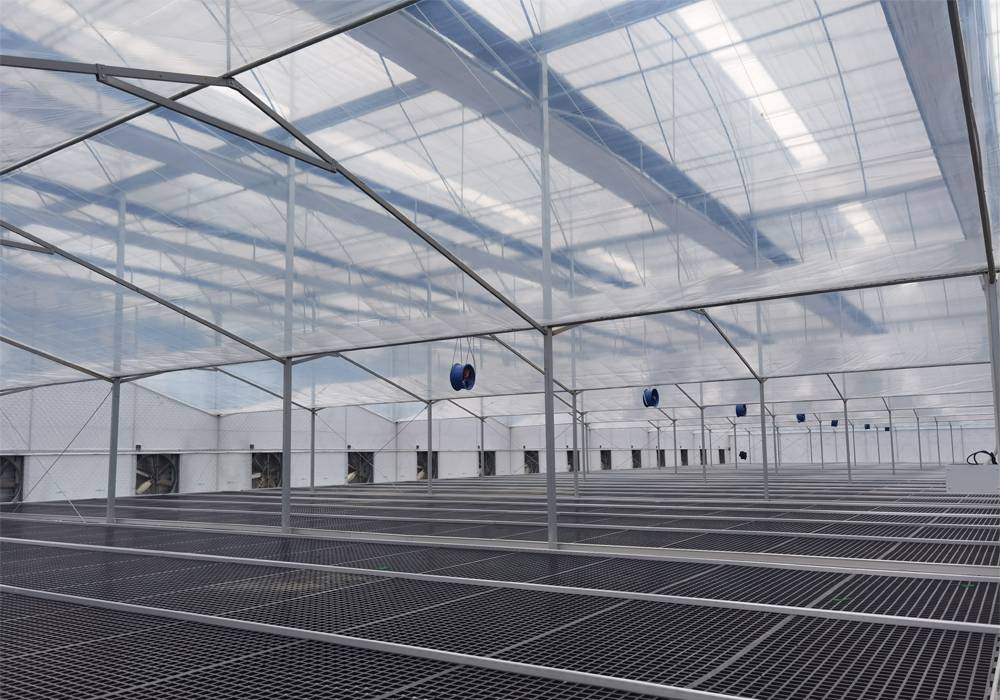
A machine vision inspection cart travels along rails on the hydroponic channels. Using multispectral cameras, it analyzes the canopy diameter, leaf color, and plant height of the leafy vegetables to determine maturity (e.g., single lettuce weight of 200–250 g). When the harvest standard is met, the system dispatches an automatic harvester. This equipment consists of a flexible clamping belt, a rotating cutter, and a conveyor belt. It cuts the whole leafy plant from the planting board, leaving a 2 cm root stub, then sends it through a bubble washer to remove debris, and finally into a pre-cooling and packaging line. After harvesting, the used planting boards are collected by an empty board stacker and sent to a washing and disinfection machine (100 ppm sodium hypochlorite soaking + high-pressure spraying), enabling the recycling of soilless planting substrates.
V. Equipment Selection Comparison Between the Two Greenhouse Types
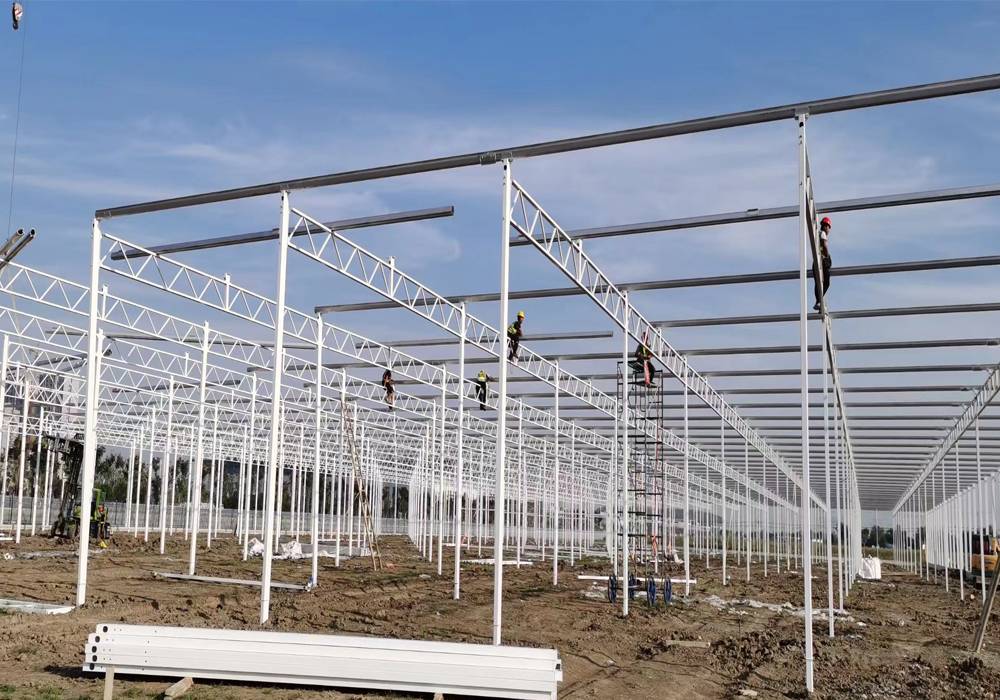
Glass green houses: Suitable for high-value leafy vegetables (e.g., ice plant, arugula). Recommended configuration: fully automatic seeding line, dual-rail transplanting robot, closed-loop nutrient solution disinfection system, and intelligent glass cleaning robot. Higher initial investment but service life of more than 20 years.
Plastic greenhouses: Suitable for large-scale production of common leafy vegetables (lettuce, romaine lettuce, spinach). Recommended configuration: semi-automatic seeder, simple transplanting assist table, wet-curtain fan linked controller, and rail assisted manual harvesting platform. Payback period is about 3–4 years.
VI. Benefits and Summary
This integrated automation solution shortens the production cycle of hydroponic leafy vegetables from seeding to harvesting to 28–35 days (compared to 50–60 days in traditional soil cultivation), increases yield per unit area by 5–8 times, saves 90% of water, reduces fertilizer use by 70%, and cuts labor by 80%. Both glass green houses and plastic greenhouses can be deployed. The soilless planting model eliminates continuous cropping obstacles, while the closed-loop control of the hydroponics system ensures products are free from heavy metal residues and have low total bacterial counts. As robot costs decline in the future, fully unmanned leafy vegetable factories will move from demonstration to widespread adoption.
